Which HOA violations deserve a friendly courtesy notice before any formal letter goes out?
Not every issue needs a formal notice on day one, and not every issue deserves a friendly reminder. Here is how to decide which violations get a courtesy step first, what that notice should say, and how to keep it from becoming a loophole.
Why a courtesy step is worth having
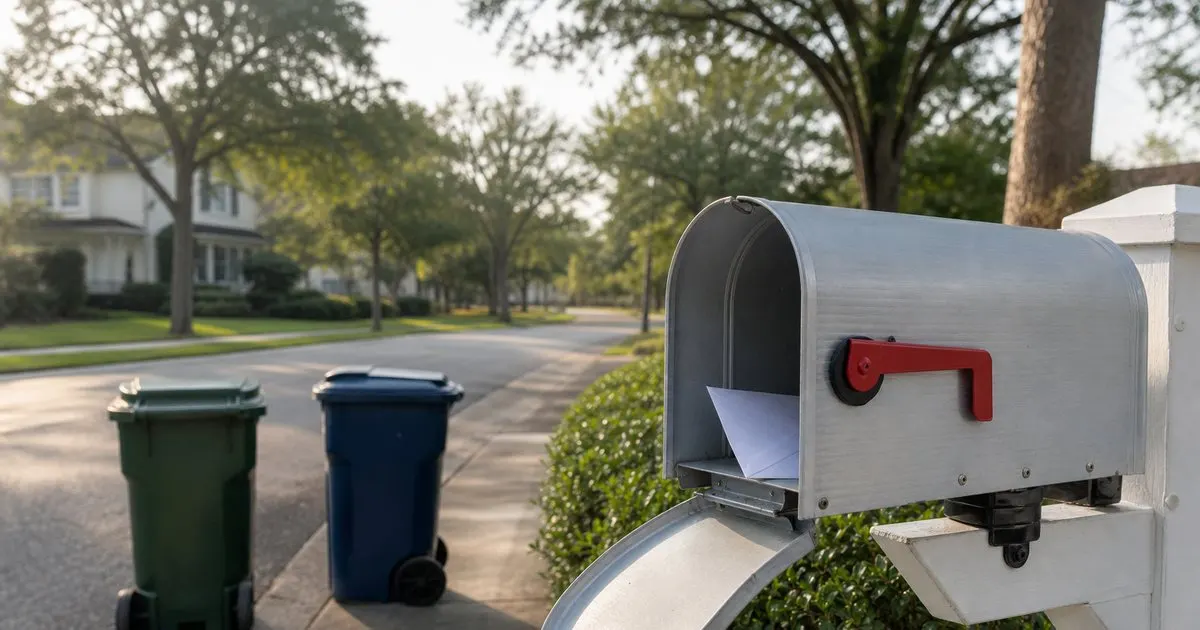
Most first-time violations in a typical community are oversights: cans left out after pickup, a wreath still hanging in February, a dead shrub nobody got around to replacing. In our experience a short, friendly reminder resolves most of these at almost no cost, and it preserves the relationship with an owner who would otherwise feel ambushed by a formal letter citing section numbers. Formal notices cost staff time, postage, and goodwill, so spending them on a trash can is a poor trade. Related: What should a board do when a violation involves a tenant instead of the owner?
Be clear about what a courtesy notice is not. It is usually not required by the governing documents, and it usually does not count as the formal notice a statute requires before a fine can be imposed. That is fine as long as everyone understands the sequence: the courtesy notice is a step the board chooses to add in front of the formal process, not a substitute for any part of it. Confusing the two is how a board ends up fining an owner who never received a proper notice. Related: When should an HOA board escalate a repeat violation to fines or a hearing?
Keep reading: Fair and Consistent Enforcement in an HOA, Documenting Violations the Right Way, Sending Notices That Hold Up. See how Covenward helps you hoa violation logging and resident notice tracking.
Which categories qualify and which do not
Good candidates share three traits: the condition is minor, it is temporary or easily reversed, and it is a first occurrence for that owner within your lookback window. Trash containers, seasonal decorations, a single instance of street parking, faded mailbox paint, weeds in a bed, and similar items fit. Poor candidates include anything involving safety, any unapproved exterior change already underway such as a fence, a shed, or a new paint color, any nuisance currently affecting neighbors, anything with a deadline set by statute, and any owner with a prior notice for the same category inside the window.
Put the list in your enforcement policy rather than leaving it to the manager to decide case by case. Then publish it. Owners who know that a first trash-can issue gets a reminder and a fence built without approval gets a formal notice on day one are far less likely to argue that the process is arbitrary, and the manager is far less likely to be accused of playing favorites. Related: Sending Notices That Hold Up
What a good courtesy notice says
Keep it short, specific, dated, and human. Name the item and where it was seen, include a photo if you have one, cite the rule number in a single phrase, and give a reasonable timeframe, typically somewhere between seven and fourteen days depending on the item. Say in one sentence what happens next if the condition is still there, and sign it with a real name rather than an office title. Avoid legal vocabulary; the whole point of this letter is that it does not read like the one that follows.
Log it the same way you would log a formal notice: date, method, a copy of the letter, and the photo. If the condition persists, the formal notice can reference the courtesy reminder and its date, which shows a hearing panel that the board tried the easy path first. A courtesy notice that never made it into the file is a courtesy nobody can prove was extended. Related: How do you handle an HOA violation notice that comes back as undeliverable?
Guarding against the loophole
A courtesy step can be gamed. An owner fixes the condition for a week, lets it revert, and expects another friendly reminder. The lookback rule closes that gap: a second occurrence in the same category inside the window skips the courtesy step and goes straight to a formal notice. Track how often courtesy notices in each category actually resolve the issue. If a category rarely cures at the reminder stage, it does not belong on the list, and the data will show that within a year.
Consistency is the other guardrail. Every owner in the same category with the same history gets the same courtesy step, and the log should be able to demonstrate that. A tracking system that records the notice stage for every case makes it simple to show that the reminder was offered evenly, and it flags a second occurrence automatically so the manager does not have to remember.
- Reserve courtesy notices for minor, reversible, first-time conditions and write the list into policy.
- Never treat a courtesy reminder as the formal notice a statute or your documents require.
- Keep the reminder short and human, but log it with the same rigor as a formal notice.
- Use a lookback window so a second occurrence skips the courtesy step automatically.

Julien Jimenez
Julien Jimenez is an independent software builder based in Paris. He designs, ships, and operates focused SaaS products for small businesses and independent professionals. Read the full author page.
Track violations and notices without the paperwork
HOA violation logging and resident notice tracking. Covenward is built to help you put this into practice.
Start a logMore from the Covenward blog

Fair and Consistent Enforcement in an HOA

Documenting Violations the Right Way

Sending Notices That Hold Up
Get the Covenward playbook
Practical guides on hoa management, straight to your inbox as we publish them. No spam, unsubscribe any time.